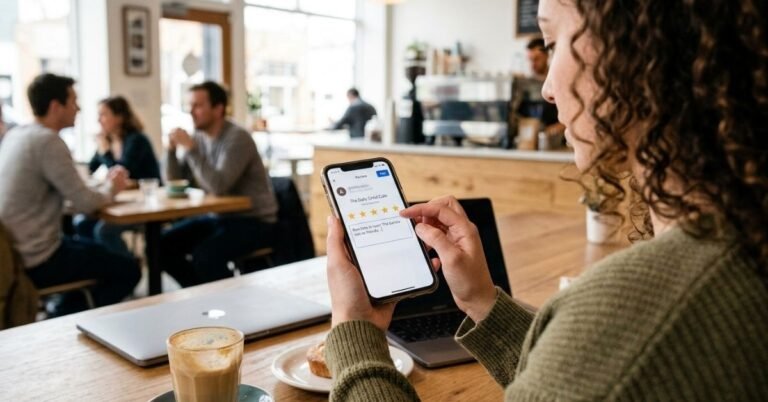
The notification says “New 1-star review”. Your stomach drops before you’ve read a word. By the second sentence you’re writing a reply in your head, and it isn’t polite.
A bad review doesn’t have to cost you customers, or undo the work you’ve done to get 5 Star Google Reviews. Don’t reply in the first hour. Check the facts, then answer within 24 hours: thank the customer, name the specific problem, say what you’ve done about it, and give a direct way to reach you.
We help clients through this at BuyReviews. Here’s the plan we follow, hour by hour.
How do you respond to a negative review without losing customers?
You write for the people who’ll read the review later. The reviewer is upset now, and one reply may not change that. The next fifty customers who see the exchange are still making up their minds.
Google says customers notice when a business reads and replies to reviews. A calm answer under a harsh review is often what wins them.
What should you do in the first hour?
Nothing in public. Use the hour to find out what happened.
- Read the review twice, slowly.
- Look up the customer in your bookings, invoices and messages.
- Ask the staff member involved for their account, without blame.
- Decide which kind of review it is: a fair complaint, a disagreement, or one from someone who was never a customer.
- If it breaks Google’s policies, select the three dots next to it and choose Report review.
Step 4 shapes your reply. In our experience, most angry replies come from owners who skipped it.
How do you write the reply?
Draft it somewhere other than the reply box, so you can’t post it by accident.
- Open with thanks for the feedback.
- Name the specific issue in your own words, so the customer knows you read it.
- Apologise for what went wrong, or say you’re sorry they left unhappy.
- State what you’ve done or will do.
- Give a direct phone number or email.
- Ask someone else to read it before you post.
- Search your business name on Google, select Read reviews, find the review and select Reply. Paste it in and post.
Aim for three or four sentences. You need a verified Business Profile to reply.
What does a bad reply look like next to a good one?
Here’s a complaint, then two ways to answer it.
The review: “Waited 40 minutes past my appointment and nobody said a word. Won’t be back.”
A reply that loses customers: “We were extremely busy that day and our staff work very hard. Most of our clients understand that delays happen. Perhaps you should have asked at the desk.”
A reply that keeps them: “Thank you for telling us, [Name]. A 40-minute wait with no update isn’t good enough, and I’m sorry. We’ve changed our process so the front desk now tells clients about any delay over ten minutes. I’d like the chance to make this right. Please call me on [phone number].”
The first one defends the business and blames the customer. The second owns the problem and shows a fix. A future customer reading both knows which clinic they’d pick.
How do you reply to different kinds of low reviews?
What do you say to a low rating with no comment?
Keep it short. “Thanks for your rating. I’m sorry your visit wasn’t better. Please get in touch on [phone number] so we can understand what went wrong.”
What do you say to a three-star review with mixed feedback?
Thank them for the positives first, then address the complaint. Mixed reviews are often the most useful ones you’ll get, and Google says a mix of positive and negative feedback often feels more trustworthy.
What do you say when the review gets personal?
Stay level. Don’t match the tone. Acknowledge any real issue underneath, and report the review if it abuses a staff member, because Google doesn’t allow harassment.
What should you do after you post?
Pick up the phone. If you have the customer’s number, call the same day and listen before you explain.
Fix what you can. Then let them decide what to do about the review. Google says customers can update a review after reading your reply. Don’t offer a refund, discount or gift in exchange for a change, because Google bans that.
Note the lesson as well. If two customers this year have complained about wait times, the reviews are telling you something.
What should you do in the following week?
Make sure this review isn’t the newest thing on your profile for long.
- On a computer, open your Business Profile, select Read reviews, then Get more reviews, then Copy. Google provides the link, so you don’t need a Google review link generator.
- Ask every customer in person on the day you serve them.
- Text the link within the hour, or send a short review request email template.
- Send one reminder a week later.
Ask everyone, not only the customers who look pleased. That’s how to get more Google reviews that show an honest picture.
What must stay out of every reply?
Check your draft against this list before you post.
- No arguing point by point.
- No blaming the customer or a named staff member.
- No personal details about the customer, their purchase or their circumstances.
- No sarcasm.
- No discount codes or sales offers.
- No copy-and-paste wording you’ve used under other reviews.
- No accusation that the reviewer is lying or works for a competitor.
Can someone help with this?
Yes. Writing the reply is yours to do, because customers can tell when the owner has answered. We can help with the rest.
At BuyReviews, you share your customer list and we send review requests and reminders, so honest reviews keep arriving. We can also help you report reviews that break Google’s rules, which is the right way to remove fake Google reviews. It’s how we help clients get Google reviews after a bad week and improve Google reviews over the year. Knowing how to respond to negative Google reviews, and keeping new ones coming, is what online reputation management in Australia comes down to.
Frequently asked questions
What is the best way to respond to a negative review?
Wait until you’re calm, check the facts, and reply within a day. Thank the customer, name the specific problem, say what you’ve done about it, and give a direct phone number or email. Keep it to three or four sentences. Write it for the next customer who’ll read it, not to win the argument.
Should I apologise even if I wasn’t at fault?
You can be sorry they had a bad experience without accepting blame for something you didn’t do. ‘I’m sorry you left unhappy’ is honest and costs nothing. Then state your side once, briefly and without heat. Where you did get it wrong, say so plainly. Customers forgive mistakes faster than excuses.
How do I reply to a one-star review with no comment?
Reply anyway. Thank them for the rating, say you’re sorry it wasn’t a better experience, and invite them to contact you with details so you can put it right. Keep it to two sentences. If you can’t find them in your records at all, you can also report the review to Google.
Should I reply in public or in private?
Both. Post a short public reply first, because future customers need to see that you responded. Then take the detail offline with a phone call or email, where you can sort out the problem properly. Don’t argue the case in public, and don’t share anything personal about the customer in your reply.
Can I edit my reply to a Google review?
Yes. You can edit or delete your own reply from the same place you wrote it, under Read reviews on your Business Profile. It’s useful if you spot a typo or if the situation changes. Once the problem is fixed, we’d add a line saying so, which shows future customers the outcome.
What should you do next?
If there’s a negative review waiting, start the first-hour steps now and have your reply posted by this time tomorrow.
Then get your happy customers on the record. Send BuyReviews your customer list and we’ll help you get Google reviews that put one bad day in context.